
Rat Removal in Chicago: Getting Them Out and Keeping Them Out
Removing the rats you can see is the easy part. We remove them, then close the openings so the next ones can’t move in.
What “rat removal” actually means
Rat removal is three jobs, not one: take out the rats that are in the building, deal with the burrows and travel routes outside, and close every opening they used to get in. If a company only does the first, you will probably call again in a few weeks. Chicago.gov says Norway rats can have 4 to 7 litters a year with 8 to 12 pups each, so a few survivors can rebuild a colony quickly.
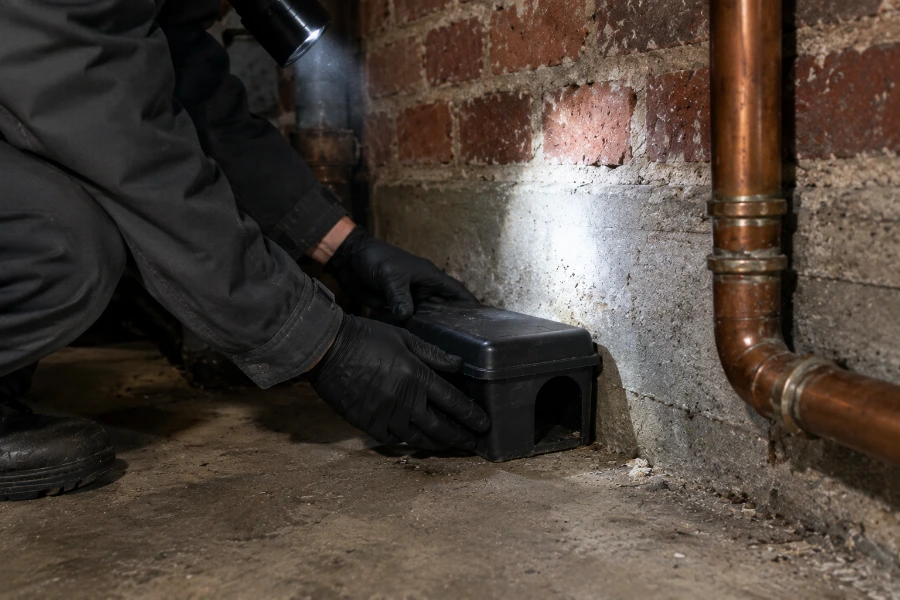
That is why we treat removal as a short project with a start, a middle and a finish, not a single visit.
- Inside: traps set along the routes rats actually use, mainly basements, kitchens, laundry rooms and wall voids near pipes.
- Outside: burrows along foundations, garage slabs, fences, steps and under sheds are found and dealt with.
- The openings: every gap we find is sealed with materials rats cannot chew through. See rat proofing and exclusion.
- The follow-up: we come back to check for new activity and to confirm the seals are holding.
How a rat removal job works, step by step
Every building is different, but most jobs follow the same order. Knowing the order helps you judge whether a company is doing the work properly.
- Inspection. We look for droppings, rub marks along walls, gnaw marks, burrows and entry gaps. See what the inspection covers.
- We explain what we found. Where the rats are, how they are getting in, and which method fits your building and household. You see the findings before you decide anything.
- Agree the plan. We lay out the steps and what the work involves, so you know what happens next.
- Treatment. Traps and control measures go in where rats travel, placed with pets and children in mind. Outdoor burrows are treated at the same time, not later.
- Seal the entry points. Gaps around pipes, foundation cracks, vents, door sweeps and utility lines are closed so new rats cannot follow the same route.
- Follow-up. We return to check traps, look for new signs and confirm the seals are intact.
The methods, and when each one fits
No single method works everywhere. A basement with a dog upstairs needs a different approach than the alley behind a restaurant. Here is how we choose.
| Method | Where it fits | Watch out for |
|---|---|---|
| Snap or enclosed traps | Inside homes, especially with pets or kids | Needs regular checks and correct placement along walls and runways |
| Tamper-resistant bait stations | Outdoor areas and some commercial settings | Poisoned rodents can be eaten by pets and wildlife. Placement and monitoring matter. |
| Burrow treatment | Active burrows along foundations, slabs and fences | Do not fill a burrow while rats are still using it, or they push toward your walls |
| Exclusion (sealing) | Every job, once activity is under control | Needs the right materials: steel mesh, concrete, metal flashing. Foam or tape alone fails. |
| Sanitation and habitat changes | Yards, alleys, garbage areas, bird feeders | Takes the whole building or block to cooperate, not just one unit |
We explain the pros and cons of each in rat control methods compared, and why we are careful with poison in rat poison risks.
Why rats are harder to remove in Chicago
Chicago is a hard city for rat control, and local conditions change how the job has to be done. Rats here are almost always Norway (brown) rats. They live in burrows and travel low along walls, which is why most of the work happens at ground level, in basements and along foundations. For a longer explanation, read why Chicago has rats.
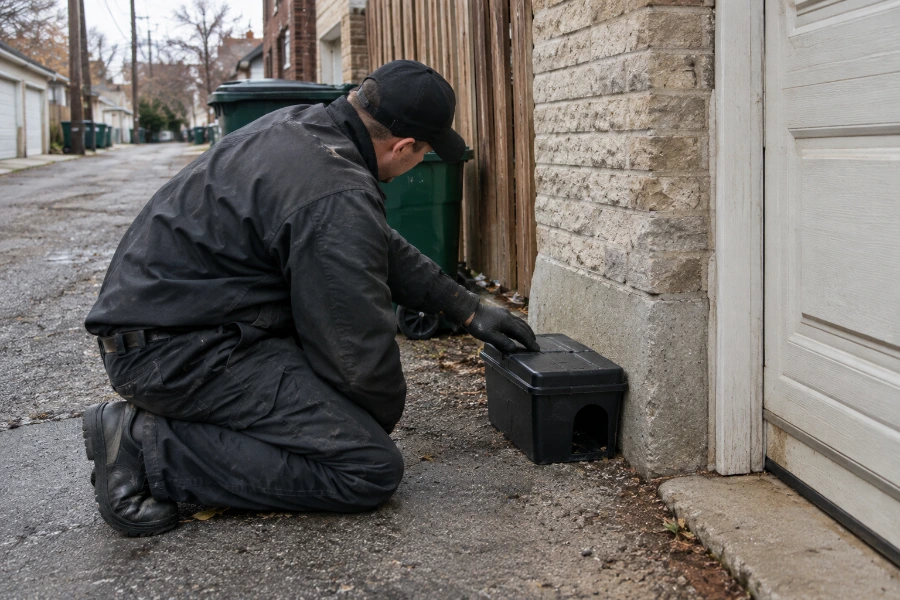
- Alleys and shared fences. Alley garbage carts, shared garages and fences give rats food and cover right next to your building.
- Old brick and stone foundations. Aging mortar, small gaps at pipe entries and old coal-chute or vent openings are common entry points in older two-flats and greystones.
- Shared basements and walls. In multi-unit buildings rats move between units, so one apartment cannot solve it alone. See two-flats and three-flats and apartment buildings.
- Construction and sewer work. Digging, demolition and utility work can push rats into neighboring yards and basements.
- Winter. When it turns cold, rats look for warm, protected spaces. See the rat season calendar.
We also point you to the city where it helps: outdoor rat activity in alleys and public areas can be reported to Chicago 311, and 311 and private pest control do different jobs.
Where rats get into Chicago buildings
An adult rat can squeeze through a gap about the size of a quarter. These are the spots we find most often:
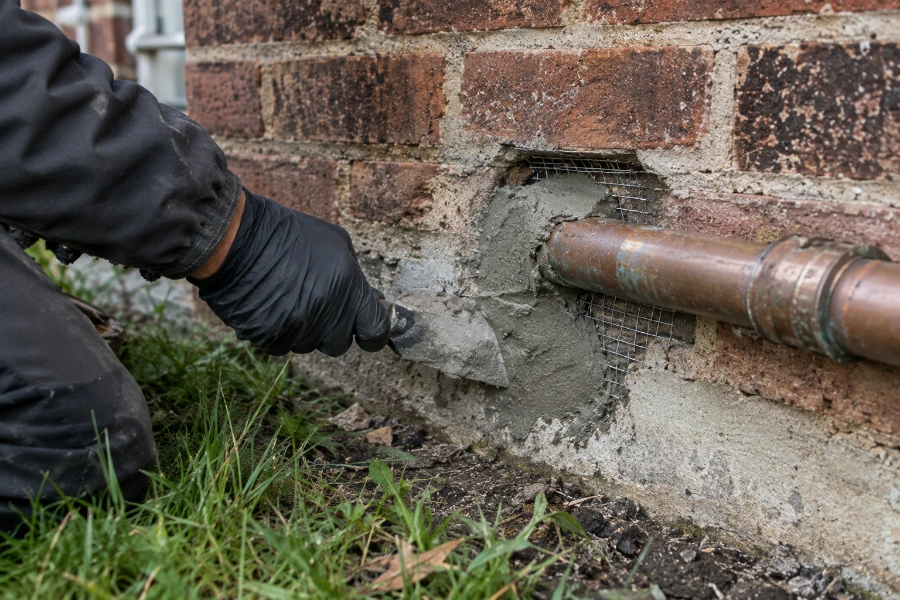
- Gaps around gas, water and electrical lines where they enter the foundation
- Cracked or crumbling mortar and foundation joints at ground level
- Broken or missing vent screens, old coal chutes and unused openings
- Gaps under garage doors, back doors and alley-facing doors
- Damaged or disconnected floor drains and old sewer or drain connections
- Openings around porches, steps and under decks or stairs
- Gaps where dryer vents, AC lines and cable lines pass through walls
Rats also chew. They can enlarge a small opening and are known to damage wiring, which is a fire risk. See what rats can chew through and rats chewing wires. More detail is on how rats get in.
How long does rat removal take?
Most jobs need an initial visit and at least one follow-up. A light problem caught early can settle in a couple of weeks. A heavy infestation, a multi-unit building or a problem with active outdoor burrows can take longer, because the source has to be dealt with, not only the rats inside.
| Stage | What happens | Typical timing |
|---|---|---|
| Inspection and findings | The property is inspected and the findings are explained | Same day or next day, depending on schedule |
| First treatment visit | Traps and controls placed, burrows treated, first sealing work | Usually the visit after the inspection |
| Follow-up checks | Traps checked, new signs looked for, seals confirmed | Timing depends on activity |
| Final sealing and cleanup | Remaining gaps closed; droppings and nesting cleaned if needed | When activity has stopped |
We do not call a job finished until the follow-up shows no activity and the seals are holding. For more on timing, see how long rat control takes.
What affects the scope of a rat removal job
No two rat jobs are the same. What we find during the inspection decides how much work is needed and how many visits it takes.
- How active the infestation is and how many visits it needs
- Building type and size: a single-family home is different from a six-flat with a shared basement
- How much sealing is needed: a few gaps versus a whole foundation
- Outdoor conditions: burrows, yard conditions and alley access
- Cleanup: droppings, nesting material and contaminated insulation are separate work
- When you call: urgent and after-hours visits are planned around when you need us
To see how a job unfolds from the first call, read how it works, or see what an inspection covers.
Pets, children and poison: what to know
The method matters as much as the result. Rodenticide (rat poison) can poison pets, children and wildlife, and rats that eat it can die inside walls where you cannot reach them. We use tamper-resistant stations outdoors where they fit, favor traps indoors, and tell you plainly what is in place and where. Read more in rat poison risks and rat traps in Chicago.
Do not touch droppings or nesting material with bare hands, and do not sweep or vacuum dry droppings, which can put particles into the air. If you need cleanup, see dropping and nest cleanup. Rats can carry disease, so see rat-related diseases for what to watch for.
What to look for in a rat removal company
The wrong company will treat the rats and ignore the entry points. Use this checklist with any company, including us:
- See our page.
- A real inspection first, including outdoors and the basement or crawl space.
- Sealing is part of the job. If exclusion is missing, expect repeat visits.
- No promises of 100% removal. Honest companies explain what is likely and what depends on the building and neighbors.
What you do after we leave
- Keep bins closed and bags off the ground until pickup.
- Clear pet food and bird seed every night.
- Store firewood and boxes away from the foundation.
- Trim ground cover and vines that hide burrows against walls.
- Report ongoing alley problems to 311. Chicago.gov asks residents to report rats both outside and inside.
- Tell us if you see new signs, even small ones.
Not sure it is rats? See rat vs mouse, and if it is mice, we handle that too on our mice control page.
Rat removal in Chicago: quick answers
What does rat removal involve?
Rat removal means finding where rats are living and traveling, removing them with traps or bait stations, and closing the entry points. Cleanup of droppings and nesting material follows once the activity has stopped.
How do rats get into a Chicago building?
Rats use gaps around pipes, damaged foundation vents, broken door sweeps, gaps under garage doors and openings in the brick or siding. An adult rat can squeeze through a hole about the size of a quarter. Rat proofing closes these routes.
Do rats leave on their own?
Rarely. As long as food, water and shelter are available, rats stay and keep breeding. Waiting usually means more rats and more damage to insulation, wiring and stored items.
Is it safe to remove rats myself?
A very small problem can sometimes be handled with traps, but handling droppings and dead rats carries health risks, and rats come back if the entry points stay open. Wear gloves and a mask, and never sweep droppings dry. DIY sealing steps shows what is realistic.
How long does rat removal take?
The timeline depends on the size of the infestation and the number of entry points. Most jobs involve a first visit to find the route in, follow-up checks on traps or bait stations, and sealing once activity drops.
What attracts rats to a home?
Food, water and shelter. Open garbage, pet food left out, bird seed, clutter in basements and garages, and overgrown yards all give rats a reason to settle. Removing these makes your building less attractive.
Questions we get
Do you remove rats from walls and ceilings?
Yes, from walls and basements. Rats nest low, so noise high in a ceiling is worth checking for mice or squirrels. We identify the animal first, because the method is different.
How fast can you come?
We are open 24 hours a day, Monday to Saturday, and 8:00 AM to 11:00 PM on Sundays. For active problems see our emergency rat removal page, or call (866) 382-0259.
Is the treatment safe around pets and kids?
We choose methods with pets and children in mind and tell you where everything is placed. Outdoor bait is kept in tamper-resistant stations. Ask us about alternatives if you have a particular concern.
Will the rats come back?
Not if the entry points are sealed and the food and shelter around the building are controlled.
Do I need to do anything before you arrive?
Not much. Leave the areas you saw activity accessible, keep pets away from basements and crawl spaces, and note where and when you saw signs. A phone photo helps.
Can you handle a multi-unit building or a landlord property?
Yes. See our pages for apartment buildings, two-flats and commercial properties.
How do I know it is rats, not mice?
Rat droppings are larger (about capsule-sized) and rats leave burrows outside and greasy rub marks along walls. Read signs of rats or send us a photo.
What decides how many visits a rat removal job needs?
It depends on how active the rats are, how large the building is and how much sealing is needed. Most jobs need an initial visit and at least one follow-up.
Get the rats out, and the way they got in
Tell us what you saw, where and when.
Rat Control Chicago Pros · Open 24 hours Mon–Sat · Sun 8am–11pm