
Rat Proofing in Chicago: Seal the Openings Rats Actually Use
Traps and bait deal with the rats you have. Exclusion deals with the ones that haven’t arrived yet.
Why sealing comes first
Traps and bait deal with the rats you have. Exclusion deals with the ones that have not arrived yet. A rat needs a hole about the size of a quarter, according to Chicago.gov, and a young rat can get through an even smaller gap than people expect. If you treat the rats and leave the opening, new ones move in. With 4 to 7 litters a year per female, that happens fast.
Exclusion is the part of rat control that lasts. It is also the part that is easiest to skip, because it is slower and more physical than setting a trap.
Where rats get into Chicago buildings
- Foundation and masonry: cracked mortar, stone foundations and gaps at the sill plate.
- Utility penetrations: gas, water, cable and conduit entries through walls and foundations.
- Old coal chutes and abandoned openings in older buildings.
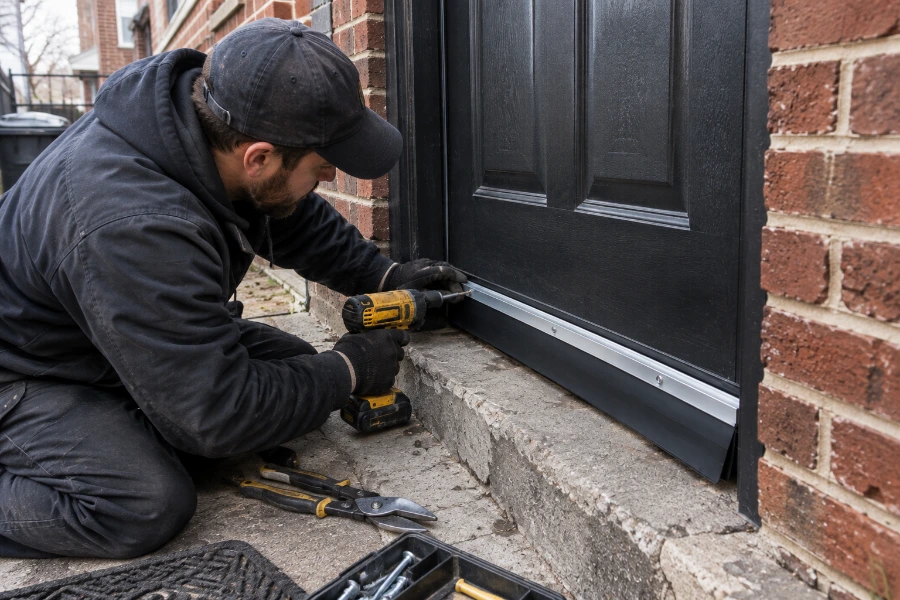
- Garage doors and side doors: worn seals and sweeps, and gaps at the corners.
- Vents: dryer, furnace and foundation vents with torn or missing screens.
- Drains and sewer connections: broken or disconnected lines in basements.
- Porches, steps and decks: gaps and voids where rats can burrow in.
- Roof lines and soffits in some buildings, where roof rats or squirrels can enter. In Chicago the main rat is the Norway rat, covered in Norway rat vs roof rat.
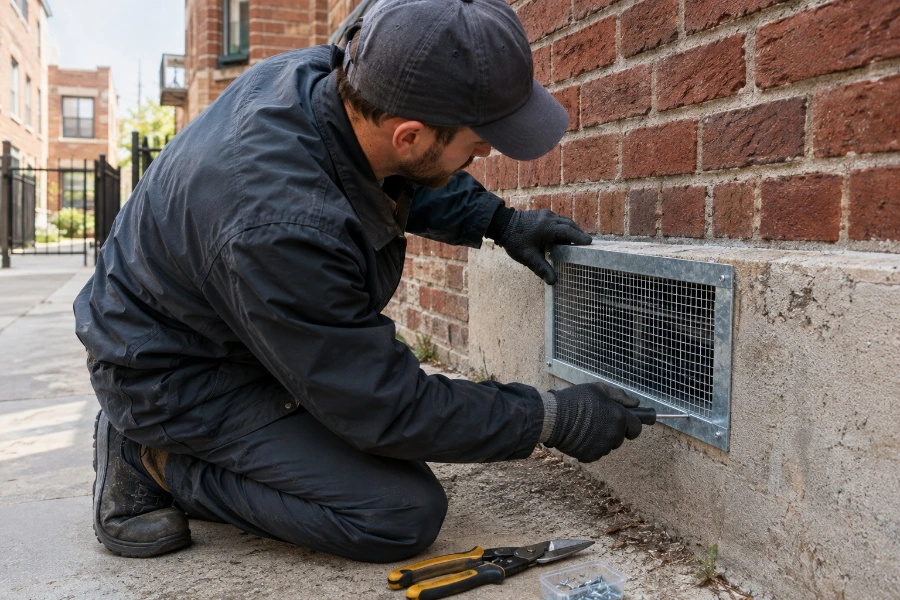
Details on entry points are in how rats get in.
What rat-proof materials actually work
Rats chew through soft materials. Foam, caulk, plastic, wood and thin sheet metal fail. Exclusion only works with materials rats cannot get through or chew through quickly.
| Material | Best used for | Why it works |
|---|---|---|
| Stainless or galvanized steel mesh (hardware cloth) | Vents, openings around pipes, crawl-space openings | Too hard to chew, can be fastened and sealed in place |
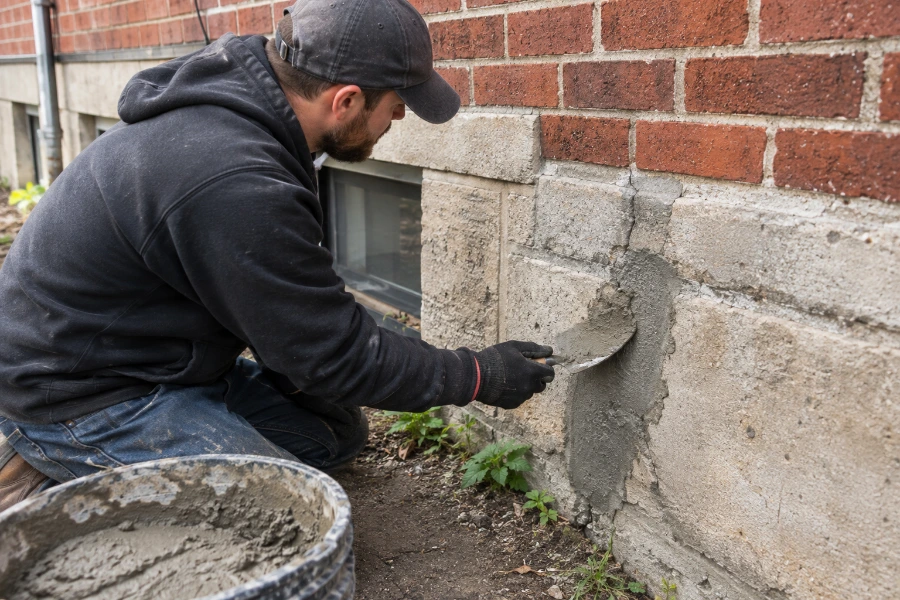
| Concrete or hydraulic cement | Foundation gaps, cracks, burrow entrances at the wall | Permanent, rigid and gnaw-proof |
| Metal flashing and kick plates | Door corners, damaged door bottoms | Protects the edge rats like to gnaw |
| Door sweeps and weatherstripping | Garage and exterior doors | Closes the gap at the bottom of a door |
| Copper or steel mesh with sealant | Small utility penetrations | Mesh stops chewing, sealant closes the rest |
| Foam or caulk alone | Not suitable by itself | Rats chew through it, and some foams attract them as nesting material |
See what rats can chew through and DIY rat sealing if you want to try small repairs yourself.
How a rat-proofing job works
- Inspection. We walk the exterior and the interior and mark every gap, not only the obvious ones. See the Rat inspection.
- Active rats first. Sealing a building with rats still inside can trap them in the walls. We deal with the animals first, then close the building.
- Closing the openings. Each gap is closed with the right material. Large gaps get mesh and concrete. Doors get sweeps and flashing. Vents get new screens.
- Documented. We show you photos of what was sealed and where, so you can see the work.
- Follow-up. We check that the seals are intact and that no new activity has appeared.
Foundation, mortar and masonry repair
Many Chicago buildings have brick and limestone foundations that are over a century old. Mortar erodes, small cracks widen, and rats use them as travel routes and entries. A hydraulic cement or mortar patch over a mesh backing makes the gap permanent. We repair small gaps as part of exclusion. A badly deteriorated wall or structural cracking needs a mason or structural contractor, and we tell you when that is the case.
What to expect in different building types
- Single-family homes: foundation, garage, vents and utility entries. See single-family homes.
- Two-flats and three-flats: shared basements, porches and rear stairs. See two-flats and three-flats.
- Apartment buildings and condos: shared walls, trash rooms and common areas often need building-wide sealing. See apartment buildings and condos.
- Restaurants and commercial buildings: doors, dock areas and utility lines. See commercial rat control.
What affects the amount of sealing
Sealing is where rat problems are solved for good, and how much is needed depends on the building.
- Condition of the foundation: older brick, cracked mortar and settled slabs create more gaps
- Number of entry points: some buildings have a few, others have gaps along the whole perimeter
- Materials: steel mesh, sealant and concrete are used where each one holds up well
- Utility lines: pipes, cables and vents are common routes in
- Access: crawl spaces and tight areas can take more time to reach
See what an inspection covers to learn how entry points are found.
Keeping rats out after we seal
- Replace worn door sweeps and weatherstripping every year or two.
- Keep vegetation, firewood and stored items away from the foundation.
- Check vents and screens after storms and in fall.
- Keep garbage cans closed and the area around them clean.
- Tell us if you notice new chewing, droppings or burrows.
Questions we get
Do you seal the entry points on every job?
Yes.
Can I just use steel wool or foam?
Not alone. Rats can chew through foam, and loose steel wool can be pulled out. Use mesh, concrete or metal and fasten it properly. See DIY rat sealing.
Will sealing trap rats inside?
It can if done before the rats are dealt with. That is why we treat active rats first and seal after.
How long does it last?
Properly installed mesh and concrete should last for years. Door sweeps and vent screens wear out and should be checked.
Do I need exclusion if I only saw one rat?
Often yes. A single sighting usually means there is an entry point and often a burrow nearby.
Do you work on old brick and stone buildings?
Yes, that is most of Chicago. We repair small gaps as part of exclusion and tell you when a wall needs a mason.
How do you know where to seal?
We trace droppings, rub marks and burrows back to the openings rats use, then check foundations, utility lines, vents and doors.
Find every opening before they do
Tell us what you saw, where and when.
Rat Control Chicago Pros · Open 24 hours Mon–Sat · Sun 8am–11pm