
Rat Exterminator in Chicago: What a Pro Should Do
The word “exterminator” covers everything from a one-visit bait drop to a full inspection and sealing job. Here is how to tell which one you are buying.
What a “rat exterminator” really does
“Exterminator” is the word most people type, but it covers very different jobs. At one end is a single visit where someone drops bait and leaves. At the other is a full inspection, a treatment plan, sealing work and a follow-up. A rat problem comes back when the openings stay open, so the better question is not “who can kill rats?” but “who will fix the reason they are here?”
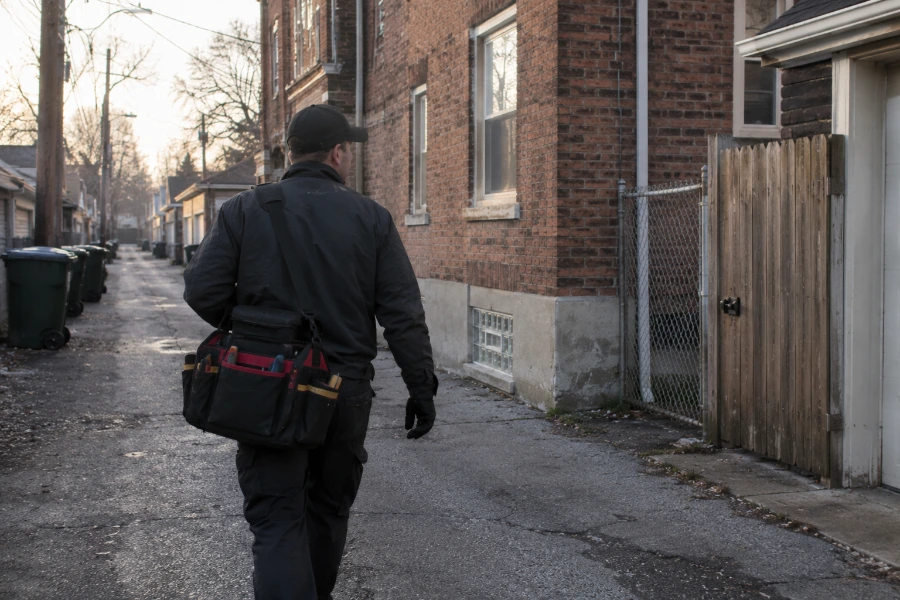
A good rat exterminator in Chicago does four things: finds where the rats live and travel, removes them with methods that fit your building, closes the entry points, and checks back to confirm it worked.
Questions worth asking before treatment starts
A good rat job starts with clear answers. Before anyone treats your home or building, it helps to ask:
- How will you find the entry points, not just the rats?
- Which treatment methods will you use, and where will they be placed?
- How are children and pets taken into account?
- What happens at the follow-up visit?
- Will I get a clear explanation of what you found and what comes next?
You can see how we answer these on our how it works page.
What a good rat exterminator does
- Inspects outside first, then inside, and shows you photos of what they find.
- Identifies the animal. Rats, mice and squirrels need different methods. See rat vs mouse.
- Seals entry points with rodent-proof materials such as steel mesh, concrete and metal flashing, not only foam or tape.
- Uses bait only in tamper-resistant stations, placed where pets and children cannot reach them.
- Explains what you need to change, such as garbage, pet food, bird seed and storage.
- Schedules a follow-up and tells you what happens if activity continues.
We use these same standards on every job. Our full job sequence is on the rat removal page and our approach to sealing is on rat proofing.
What happens on the day of your visit
Most homeowners worry about what a visit will involve. Here is what it looks like:
- Before we arrive. We ask what you saw, where and when. A phone photo of droppings or a gnaw mark helps.
- On arrival. The technician walks the outside of the building, then goes through the basement, crawl space or lower level and any room where you noticed activity.
- Findings. You are shown what was found and where, and what it means. We explain the options plainly, including which ones we do not recommend for your building.
- Work begins after you approve. Typically that is traps and controls first, then outdoor work and sealing.
See Rat inspection.
Burrows, fences and alleys: where Chicago rat jobs start
In Chicago, most rat colonies live outside the building and travel in. That is why a basement-only treatment so often fails. Norway rats dig burrows along foundations, slabs, fences, steps and under sheds, and they use alley fence lines and garage walls as travel routes.
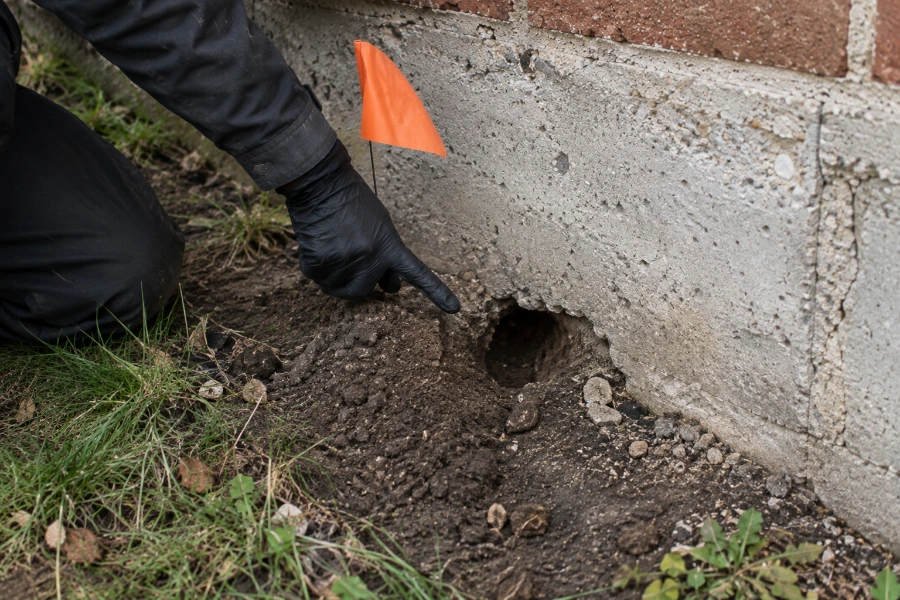
We locate active burrows, mark them, and treat them in the right order. Filling a burrow while rats are still using it just moves them toward the building. Details are on burrow, yard and alley treatment and rat burrows.
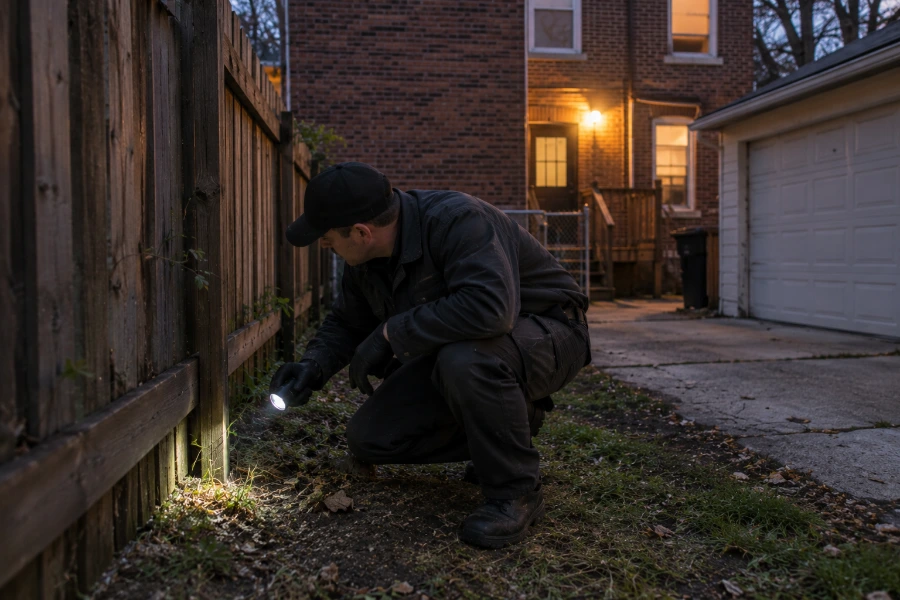
Many problems in Chicago are shared between neighbors and across alleys. That is why we also tell you what to report to the city. See how to report rats to 311.
Warning signs when hiring a rat exterminator
- No mention of entry points or sealing
- Poison only, with nothing about pets, children or placement
- Pressure to sign the same day
- No follow-up visit included
We do not promise 100% removal.
What shapes the work on a rat exterminator visit
The visit is built around what the inspection finds, not a fixed routine.
- Size of the problem: a few rats near one entry point, or activity in several areas
- Building layout: basements, crawl spaces, garages and shared walls change where we work
- Sealing: the number and size of gaps decide how much exclusion work is needed
- Cleanup: droppings and nesting material may need to be removed after treatment
Learn more on our rat inspection page.
We work on every kind of Chicago building
The right approach depends on the building and on who is responsible for the fix.
Rat exterminator in Chicago: quick answers
What does a rat exterminator do?
A rat exterminator inspects the building, finds where rats live and travel, removes them with traps or bait stations, and seals the entry points. The goal is to remove the rats and stop new ones from getting in.
When should I call a rat exterminator?
Call when you see droppings, hear scratching in walls or ceilings, find gnawed wires or packaging, or notice fresh burrows near the foundation. Early action matters because rats breed quickly and spread through a building.
How is a rat exterminator different from DIY traps?
Traps remove the rats you catch, but they do not show where rats are entering. An exterminator follows the signs to the entry points and seals them, so the problem does not return. See DIY sealing steps for what you can do yourself.
Do rat exterminators only use poison?
No. Many jobs use snap traps, enclosed bait stations and exclusion work, and the mix depends on what is found at inspection and whether pets or children are in the building. Read about rat removal in Chicago.
What happens during a rat exterminator visit?
The visit usually starts with an inspection of the exterior and interior, then trap or bait station placement, then a plan for sealing gaps. Follow-up visits check that activity is dropping. See what a rat inspection covers.
Questions we get
Is a rat exterminator the same as pest control?
Many companies do both. For rats, you want someone who treats it as an exclusion and sanitation job, not only a spraying or bait job. Ask what they do about entry points.
How quickly can you get rid of rats?
Active problems start with the first treatment visit, but a durable result usually takes an initial visit and at least one follow-up. See how long rat control takes.
Do you use poison?
Where it makes sense, in tamper-resistant stations placed away from pets, children and wildlife. Indoors we favor traps. See rat poison risks.
Can I do it myself?
Small problems sometimes can be handled with traps and sealing, but most DIY attempts miss the burrows and entry points. See DIY rat sealing and why repellents rarely work.
Are you open at night?
Yes. We are open 24 hours a day, Monday to Saturday, and 8:00 AM to 11:00 PM on Sundays. For urgent calls see emergency rat removal.
What if the rats come back?
Do you also handle mice?
Yes. See mice control in Chicago.
Get the rats out, and the way they got in
Tell us what you saw, where and when.
Rat Control Chicago Pros · Open 24 hours Mon–Sat · Sun 8am–11pm